What Happens When a Driveway Loses Its Grade
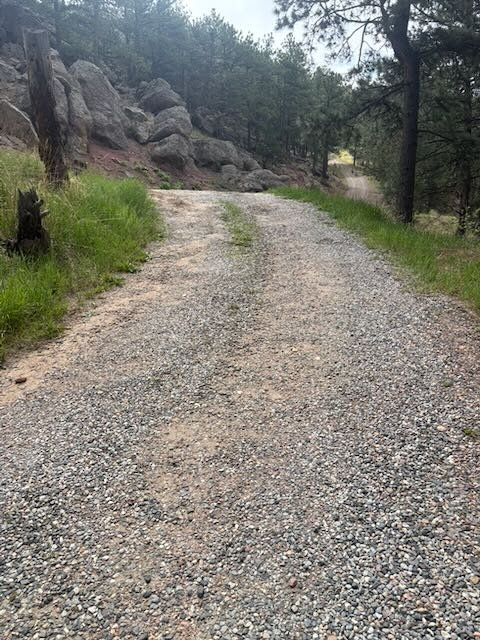
A properly graded driveway sheds water off the surface and away from your property. Over time — through use, settling, freeze-thaw cycles, and years of Colorado weather — that grade degrades. When it does, water stops shedding and starts sitting.
None of the symptoms below are gravel problems. They’re grade problems. Adding gravel on top of a mis-graded surface doesn’t fix anything — it just delays the next failure.
- Puddles and soft spots that don’t dry out after rain
- Washboards and ruts that get worse every spring
- Compacted tire tracks that channel water into ruts instead of shedding it
- Erosion at the edges where gravel migrates into the yard
- Low spots near the garage where water runs toward the foundation
What Driveway Regrading Actually Involves
Regrading means reshaping the surface so water moves the way it’s supposed to. Depending on your driveway’s condition, that includes some or all of the following:
Restoring the Crown
A properly shaped gravel driveway is slightly higher in the center than at the edges — typically 1 to 3 inches of rise across a standard width. That crown sheds water left and right off the surface. We rebuild it using your existing material wherever possible.
Re-establishing Slope
Your driveway should pitch slightly (1–2%) away from structures and toward a drainage outlet. If it’s pitching the wrong direction — or not at all — we correct it.
Redistributing Existing Material
In many cases the gravel is still there — it’s just in the wrong place. We redistribute existing material before recommending any new gravel, which keeps your cost down and your margin of improvement high.
Compaction
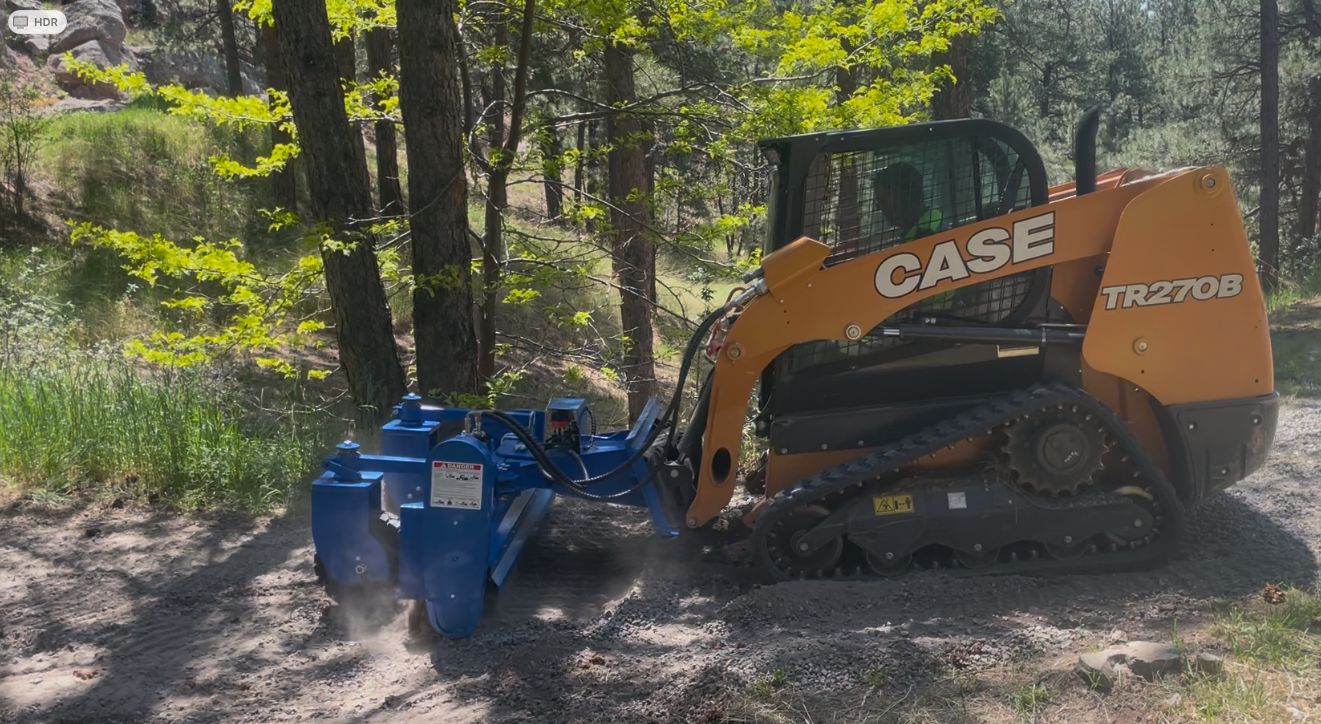
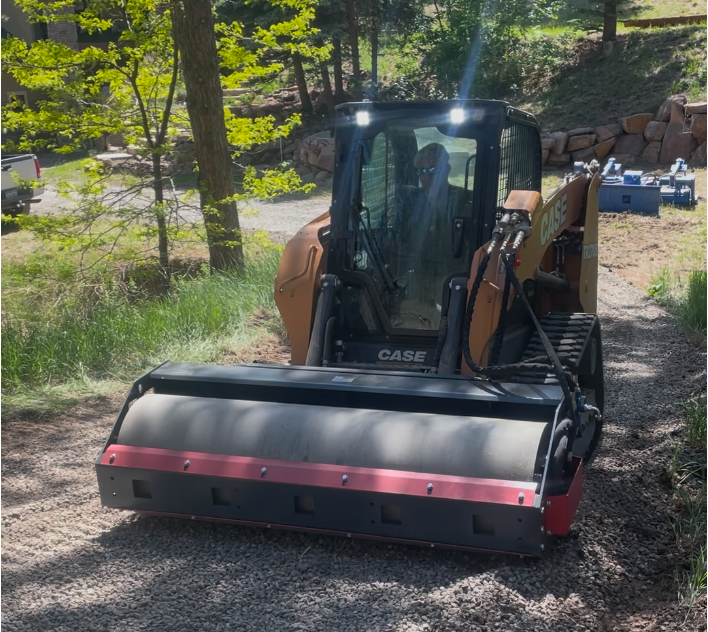
Regraded material that isn’t compacted just shifts again. We use a vibratory roller to lock the surface in place after every job. This is the step most contractors skip.
Edge Work
Where gravel has migrated into the yard or edges have lost definition, we re-establish clean lines that hold the surface in place and prevent future migration.
Why Water Is the Real Enemy of Your Driveway
Boulder County’s climate is hard on gravel driveways. You get 30+ freeze-thaw cycles a year in the foothills, intense summer thunderstorms that can dump an inch of rain in 20 minutes, and spring runoff that keeps surfaces saturated for weeks.
The driveways that hold up through all of it share one thing: they’re designed to move water off the surface fast. That means the right grade, the right crown, and edges that contain material instead of letting it scatter.
When we assess a driveway, we’re not just looking at the surface — we’re looking at where water comes from, where it goes, and whether the grade is working with or against drainage. That diagnostic approach is what separates a regrade that lasts from one that needs to be redone in two years.
Most gravel driveway failures are water failures — not gravel failures. Fixing the grade fixes the problem.
Driveway Regrading Options
Every driveway is different. After a free on-site assessment, we’ll recommend the right approach for your situation.
Reshape and redistribute existing gravel, restore the crown, re-establish slope, compact the finished surface. No new material needed in most cases.
Everything in the Surface Regrade plus a measured top-dress of new gravel to fill voids, build up low areas, and give the surface the depth it needs to hold up through the season.
Complete regrade, redistribution, new gravel where needed, compaction, and targeted drainage corrections including edge recontouring and addressing water running toward structures.
All work is quoted on-site after a free assessment. Final price depends on driveway length, existing material depth, and drainage complexity. No surprises.
Why Homeowners in Boulder County Choose Us
We Diagnose Before We Quote
Before we talk price, we walk the driveway — slope, crown, drainage, edge condition, material depth. The quote reflects what your driveway actually needs, not a one-size-fits-all package.
We Understand Drainage
Most driveway contractors operate at a “spread and go” skill level. Understanding how water moves across a graded surface — and how to engineer against it — is what we’ve built our entire service system around.
We Compact the Work
Every regrading job is finished with a vibratory roller. Properly compacted gravel resists ruts, sheds water more effectively, and doesn’t shift under traffic. This is the step most contractors skip.
We Work Your Neighborhood
We operate on a rotating territory system across Boulder County — regularly working in your area. Faster scheduling, competitive pricing, and a crew that knows the terrain and drainage patterns near you.
We Tell You What You Don’t Need
If your driveway doesn’t need new gravel, we’ll say so. A well-executed regrade of existing material often outperforms a fresh gravel load on a surface that still has grade problems.
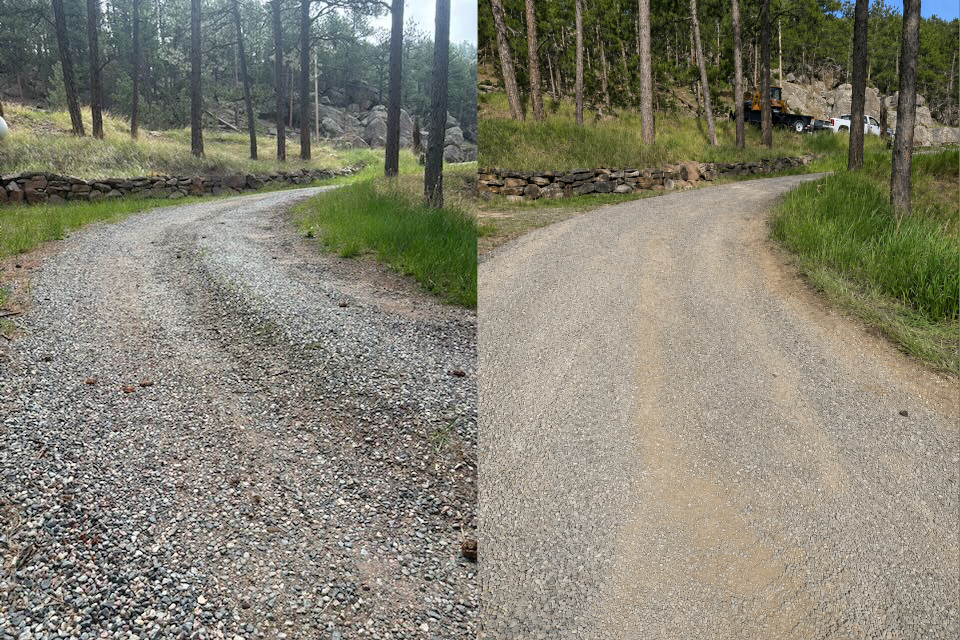
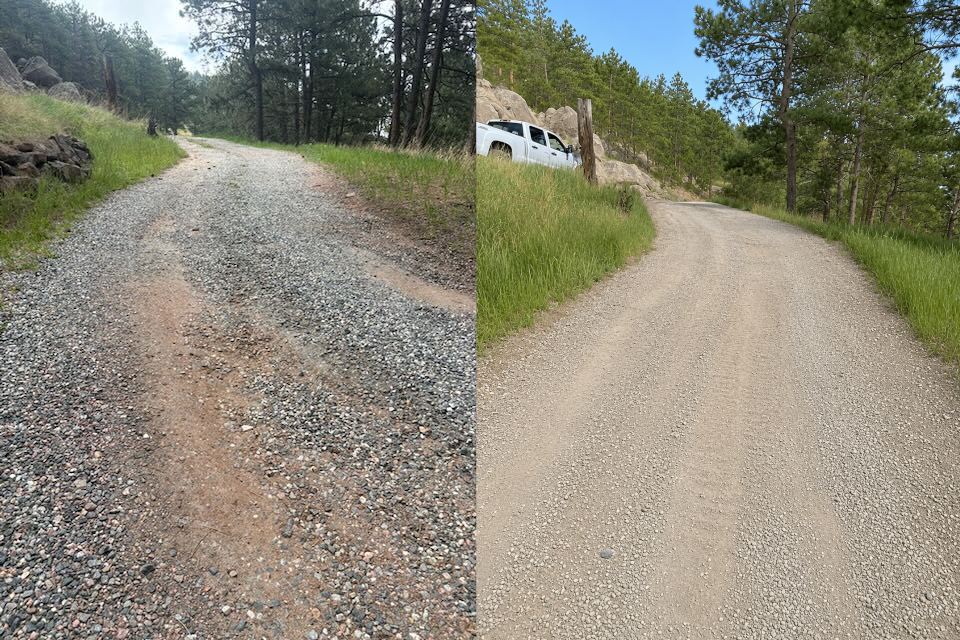
More From This Job — Lee Hill, Boulder County
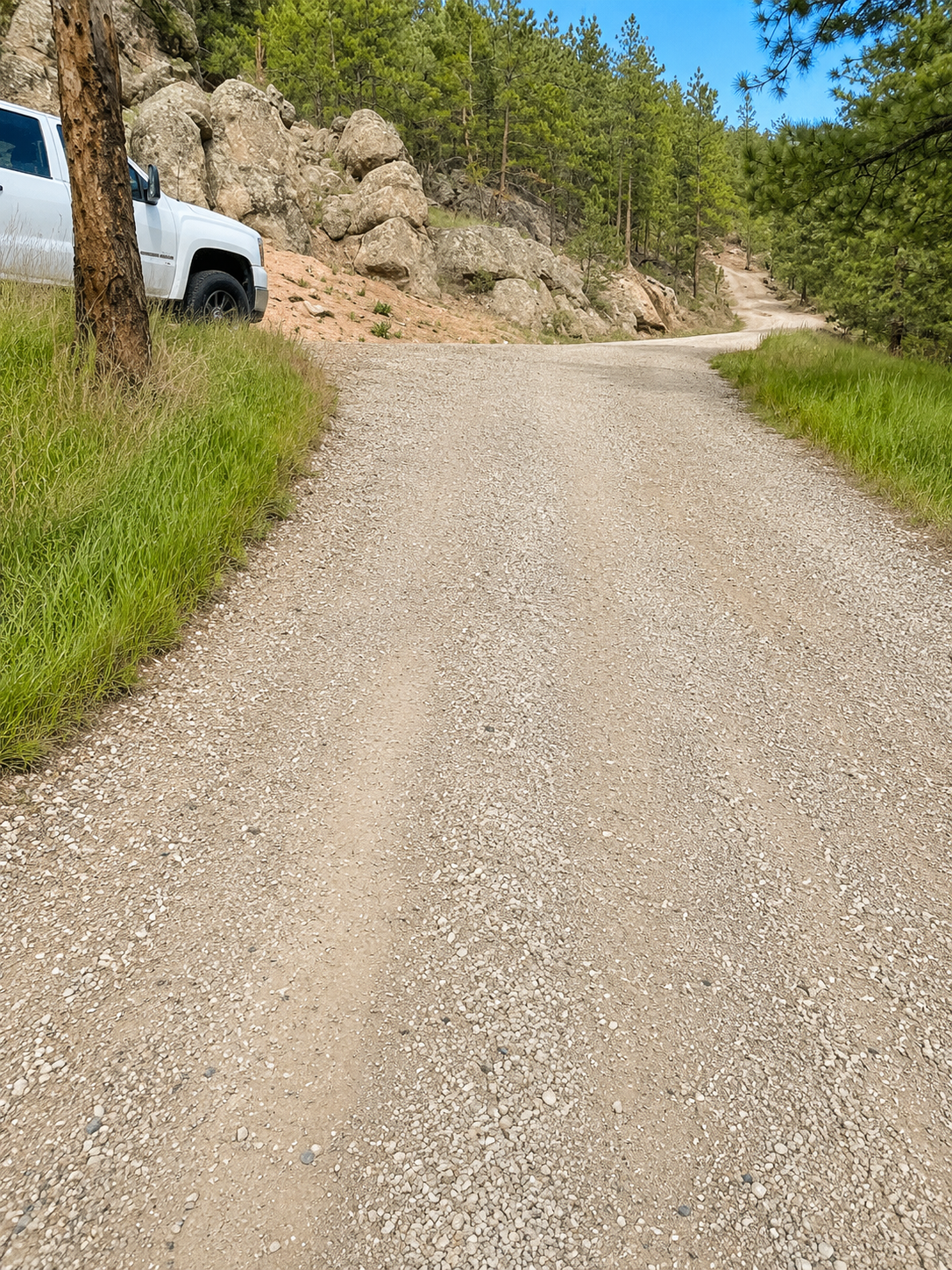
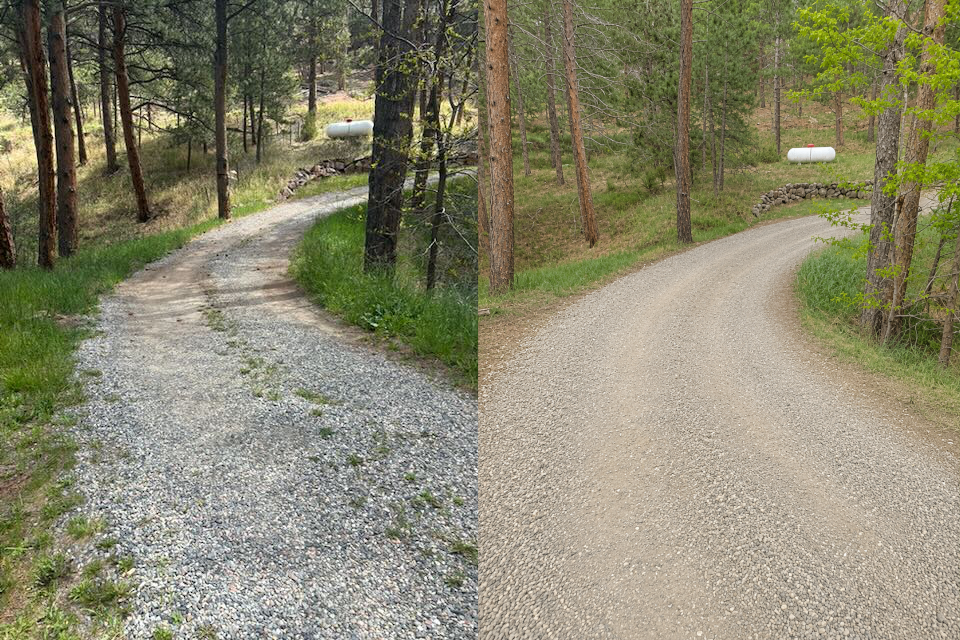
Four sections of the same driveway, before and after. The full length was regraded, redistributed, and compacted in a single visit.
Frequently Asked Questions About Driveway Regrading
Serving All of Boulder County
Gravel driveway regrading throughout the county — flatlands and foothills.
Ready to Fix Your Driveway?
A free on-site assessment takes about 15 minutes. We’ll walk the driveway with you, explain what we’re seeing, and give you a clear quote with options.
720-303-1434 Request an Estimate Online