The Question Most Homeowners Ask Too Late
Every spring I get calls from homeowners who are standing in their driveway, looking at potholes and bare patches and washed-out edges, asking me what went wrong. The honest answer is usually the same: nothing sudden happened. The driveway has been telling them something for a while, and they missed the signs.
After working on gravel driveways across Boulder County, I’ve learned that the homeowners who spend the least money over time are the ones who catch problems early. The ones who spend the most are the ones who kept adding gravel and hoping for the best.
So when should you repair your gravel driveway? The short answer is: earlier than you think. But let me give you the longer answer, because understanding the why will save you real money.
Water Is the Enemy — Not Time, Not Traffic
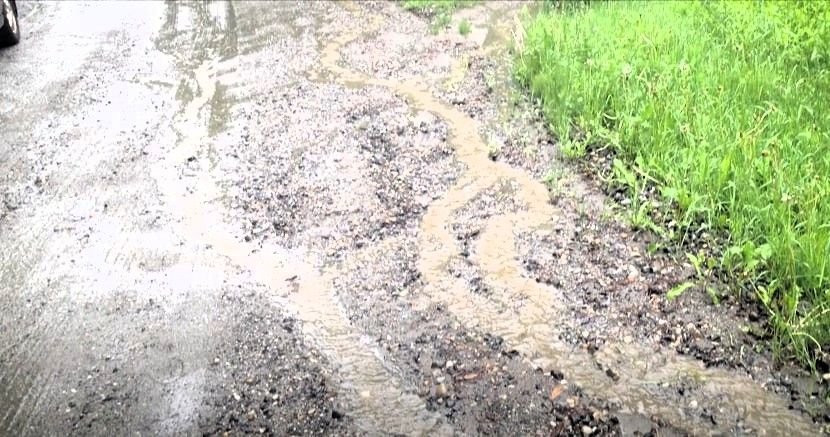
Here’s something most contractors won’t tell you, and most homeowners never figure out on their own: water destroys gravel driveways. Not age. Not weight. Not the Colorado freeze-thaw cycle by itself. Water.
Every time I pull up to a driveway for the first time, the first thing I do is read the slope. I’m not looking at the gravel. I’m asking myself: where does the water go when it rains? Where does it go when snow melts? Is it sheeting off the edges the way it should, or is it pooling, channeling, and slowly eating the driveway from the inside out?
Once you understand how water is moving through and around your driveway, you have a starting point for every repair decision you’ll ever need to make. Without that understanding, you’re just guessing — and usually spending more money than necessary.
The Signs You Should Never Ignore
You don’t need any special equipment to know your driveway needs attention. Walk it after a rain. Walk it after a snowmelt. Here’s what you’re looking for:
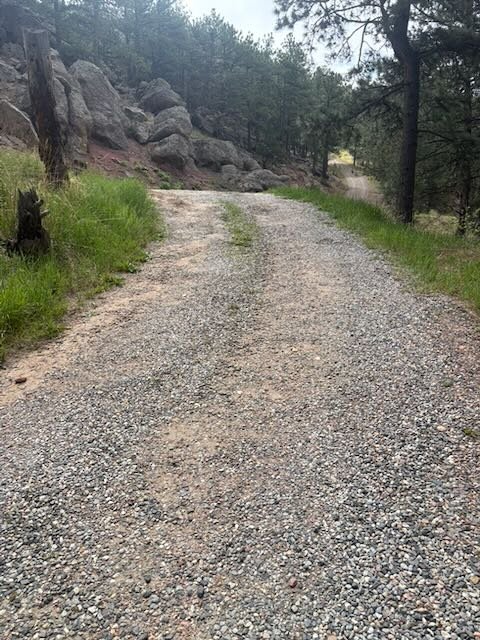
- Bare spots where the gravel has thinned out and you can see soil or base material starting to show through
- Gravel washing toward the edges or collecting in low spots at the bottom of a slope
- Small ruts or rivulets — those little channels where water has started carving its own path
- Washboards, the corrugated ripple pattern that develops when loose gravel vibrates under tires
- Potholes, even small ones
Any one of these is a signal. All of them together means you’re overdue.
Here’s the hard truth about gravel driveways in Colorado: they do not get better on their own. The snow keeps falling. The rain keeps coming. The runoff never stops. If you leave a small rut unaddressed this spring, you’ll have a serious washout by fall. If you ignore a pothole through one winter, the freeze-thaw cycle will turn it into three potholes by spring. These things compound, and so does the cost of fixing them.
Why Adding More Gravel Is Usually the Wrong Answer
I want to address the single most common mistake I see, because it costs homeowners real money and it’s completely avoidable.
When a driveway starts looking rough, most people — and unfortunately many contractors — reach for the same solution: dump more gravel on it. Rake it out, call it done. The driveway looks better for a few months, and then the same problems come back, usually worse.
Here’s what’s actually happening. Gravel doesn’t just disappear. It goes somewhere. It either works its way down into the soil as the fines migrate beneath it, or it gets pushed to the edges by traffic and washed away by water running off the surface. When you cover those problems with fresh gravel, you’re masking the symptom while the underlying cause keeps doing damage underneath.
A Real Job That Proves the Point
A few weeks ago I worked on a driveway for a homeowner who had been doing exactly this — adding a fresh load of gravel every couple of years. His driveway had developed some serious washout issues and he figured it was time for another round of gravel. He’d budgeted for a full haul-in and was expecting a significant job.
When I walked the driveway, something caught my attention. There was actually plenty of gravel there. It was just in the wrong places, pushed out to the edges on the turns, piled up where it had no business being, thin and patchy in the travel lanes. I kept looking and traced the problem back to the source: water was flowing off the paved road above his property and running downhill directly onto his driveway. Every rain event was sending a sheet of water across the gravel surface, carrying material with it.
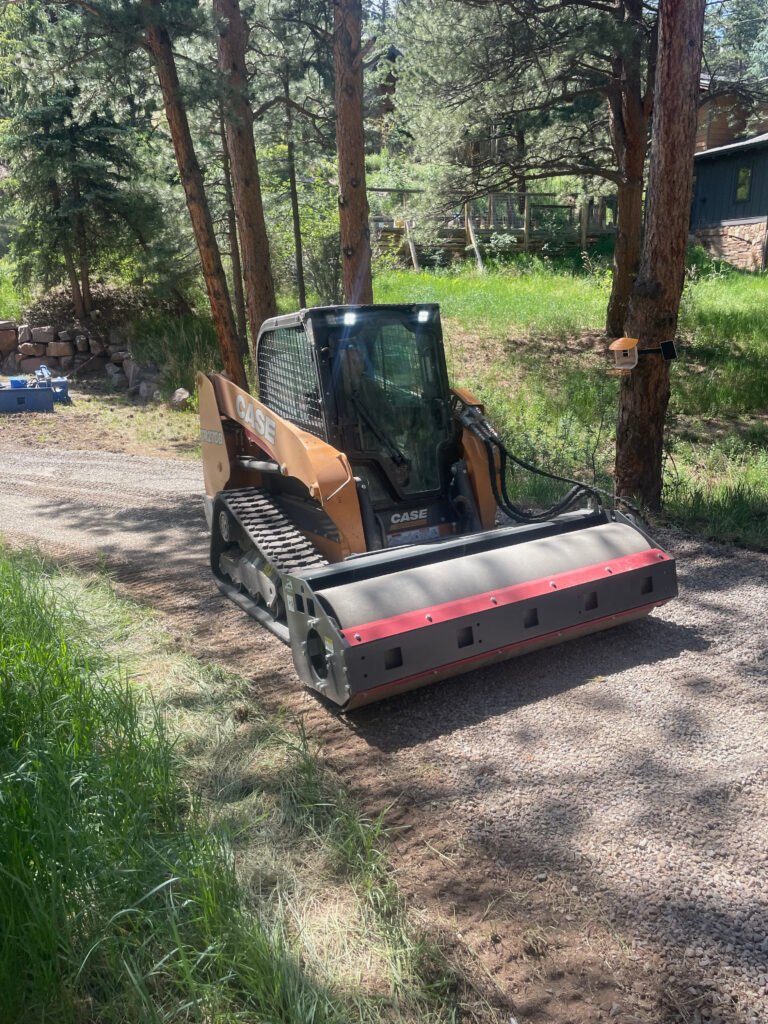
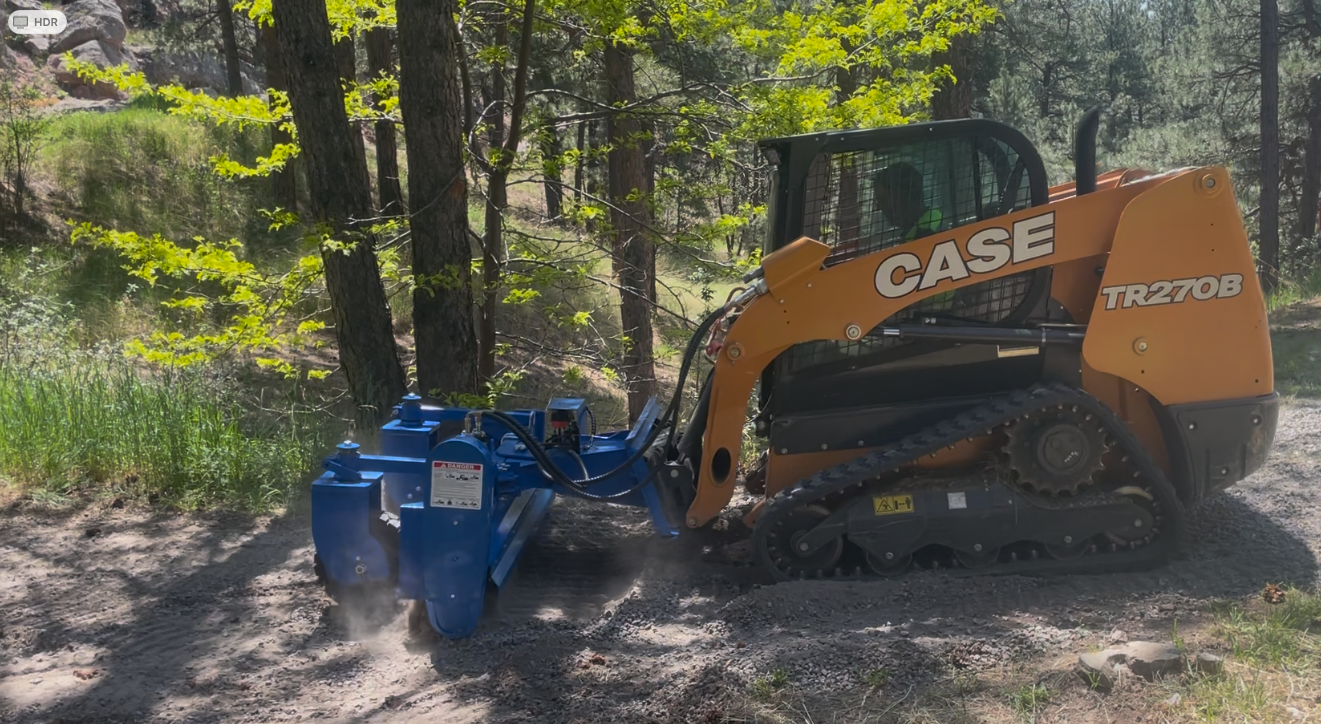
He expected me to bring in a big drain, do a major installation at the connection between his driveway and the road, and haul in a load of new material. Instead, we cut a few small drainage swales to redirect the road runoff into the natural drainage. That stopped the source of the problem. Then we power raked the existing gravel back from the edges, regraded the surface, and rolled it.
He ended up with a driveway that looked brand new. No new gravel. A fraction of what he expected to spend. The difference was starting with water and working backward to the actual problem, rather than covering the symptoms with material.
The Advice That Makes Things Worse
Beyond the “just add gravel” approach, there’s a broader pattern I see repeatedly. A contractor comes out, dumps material over the potholes, rakes it smooth, and leaves. It looks fine on the day. But nothing was done about why those potholes formed in the first place — the standing water, the poor drainage, the missing crown that should have been shedding water off the surface all along.
Two seasons later the homeowner calls again. Same problems, same spots, sometimes worse. They’ve paid twice and still don’t have a driveway that’s actually fixed.
The repair that lasts is the one that addresses drainage first. Everything else is maintenance on top of a problem.
When Is the Right Time of Year to Repair a Gravel Driveway in Colorado?
This is one of the most practical questions I get, and the answer matters more here in Boulder County than it might in other parts of the country.
The ideal window for gravel driveway repair in Colorado runs from mid March through November. That’s your working season. Within that window, the best time to address problems is as soon as conditions allow in the spring — before the heavy use of summer and before small issues have a full season to develop into larger ones.
When to Hold Off
Mid-winter is not the time. When the ground is frozen solid and snow is sitting on the driveway for extended periods, you lose the ability to do the work correctly. Proper grading and compaction require ground that can be worked. A vibratory roller on frozen ground isn’t doing what it needs to do. The material won’t behave the way it should, and you won’t be able to read how water is actually moving across the surface.
My advice is to wait until the snow has fully melted off and the ground has had a chance to thaw and drain. In Boulder County that’s typically March to mid-April depending on the year and the elevation of your property. Foothills properties often need to wait a week or two longer than the flatlands.
If you have visible damage going into winter, document it, note where it is, and plan to address it as your first job in the spring. Don’t try to force a repair in February. You’ll spend money and the results won’t hold.
The Bottom Line on Timing
Repair your driveway when you first see the signs — not when the damage becomes undeniable. The cost difference between early intervention and deferred maintenance is significant, and it grows every season you wait.
Start by understanding your water. Walk your driveway after a rain and trace where the water goes. If it’s sheeting cleanly off both sides, your drainage is working. If it’s pooling, channeling down the middle, or collecting at the edges and washing material away, you have a water problem — and that water problem will become a gravel problem, and then a base problem, and then a much more expensive repair.
The driveways I’ve seen hold up the longest aren’t the ones with the most gravel on them. They’re the ones where someone understood the water and kept it moving in the right direction.
If you’re in Boulder County and you’re not sure what you’re looking at, I’m happy to take a look. Sometimes the answer is simpler than you’d expect.
1 thought on “When Should I Repair My Gravel Driveway?”